
SHORTLIST · CURATED · DATED
Best Email Marketing Tools 2026: 10 Picks by Use Case
10 email marketing platforms for 2026 ranked by business model: ecommerce, newsletter, creator, agency. Real pricing, real limitations.
Best Email Marketing Software (2026)
Newsletter creators, ecommerce stores, and solopreneurs selling services each need a different tool. This list matches each platform to the business model that actually benefits from it.
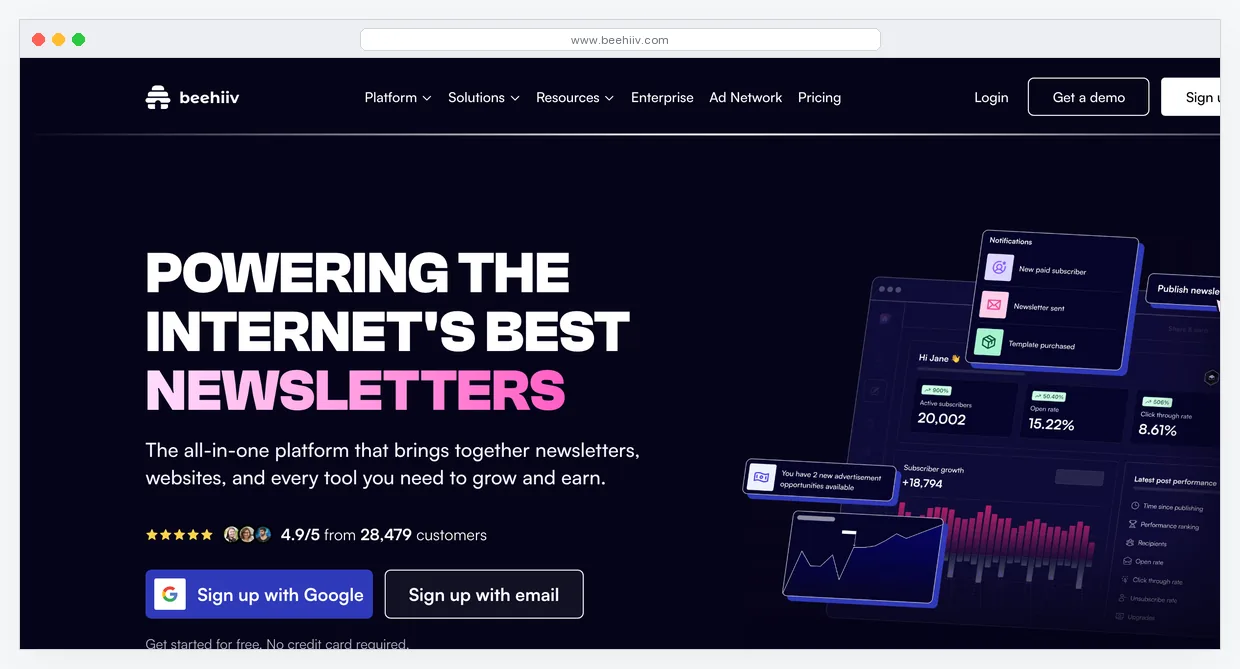

beehiiv
Free / $43/mo • Newsletter Platform and Monetization beehiiv is built for one thing: newsletter businesses. It takes 0% of paid subscription revenue, which is the first thing to check when comparing it to Substack (10% cut) or ConvertKit. The built-in ad network lets you earn from sponsored placements starting with a small list. The referral program automates list growth by rewarding readers who bring in new subscribers. All of this is available on the free plan up to 2,500 subscribers, with no credit card required.
Where it falls short: beehiiv is not a traditional marketing email tool. There are no ecommerce integrations, no purchase-triggered automation, and no sales funnel capability. If you are selling a product and need email sequences based on what someone bought or how they engaged with your checkout, beehiiv is the wrong category of tool entirely.
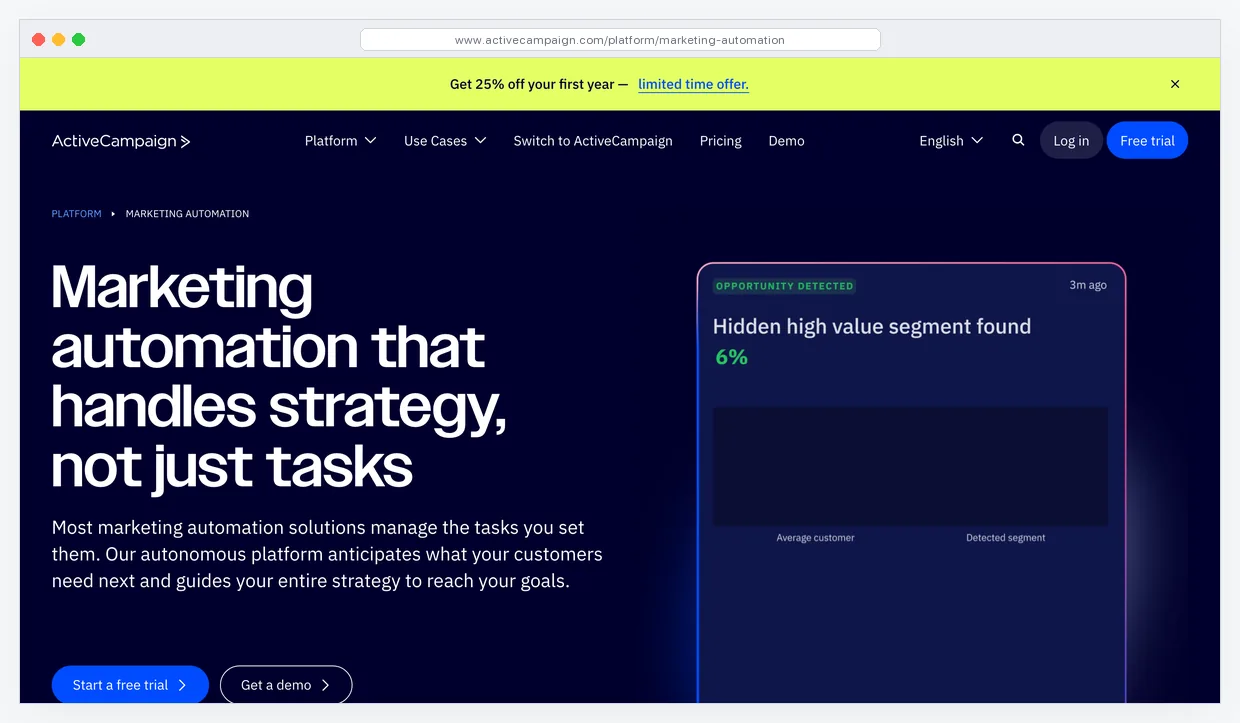

ActiveCampaign
$29/mo • Industry-Leading Automation The deepest automation builder in email marketing. ActiveCampaign offers a visual drag-and-drop automation canvas with conditional branching, contact scoring, predictive sending, and split testing on automation sequences. Over 900 integrations cover every major CRM, ecommerce platform, and web app. Deliverability consistently ranks at the top of independent testing by EmailToolTester, which matters when inbox placement directly affects revenue.
Where it falls short: The learning curve is real. Building the first complex automation sequence takes hours, not minutes. No free plan. Overkill for anyone running a straightforward newsletter or a simple welcome sequence. If your automation needs are basic, you are paying for depth you will not use.
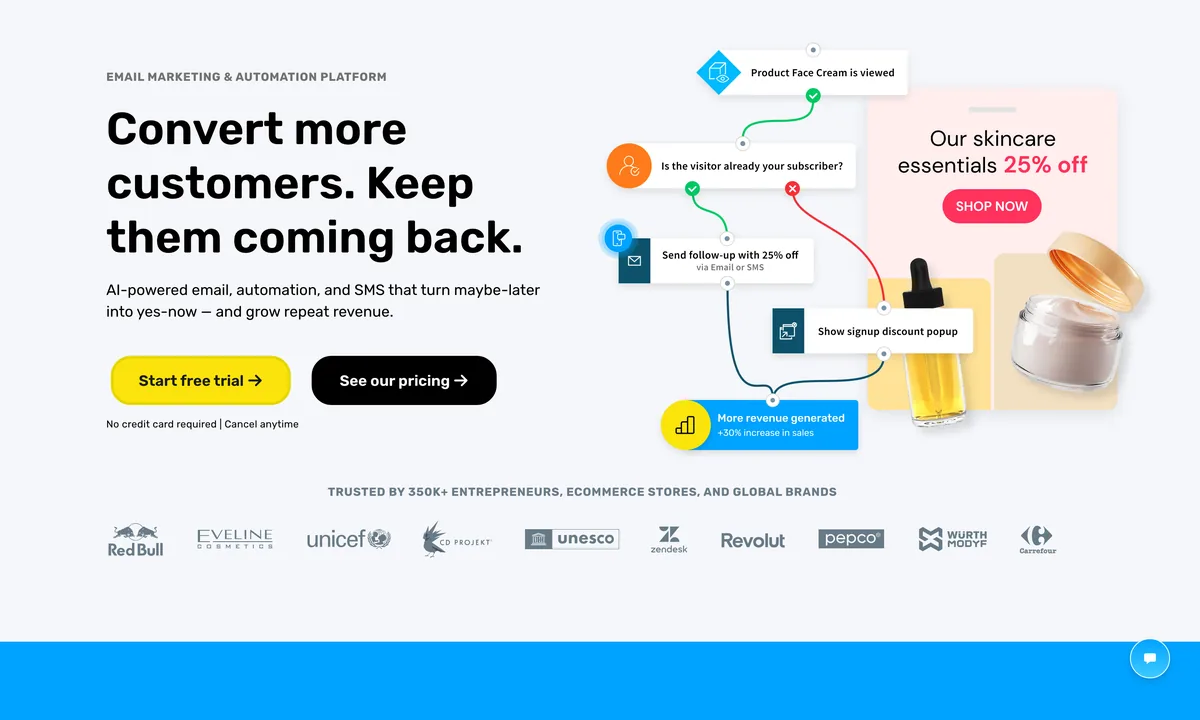

GetResponse
$15/mo • Email, Funnels, Webinars, Landing Pages GetResponse packs the most features per dollar of any tool on this list. The $15/mo Email Marketing plan includes email campaigns, automation workflows, landing pages, conversion funnels, and webinar hosting with no add-on fees. The Perfect Timing send optimization feature analyzes when each subscriber is most likely to open and shifts delivery accordingly. No other platform at $15/mo includes hosted webinars. A free 30-day trial requires no credit card.
Where it falls short: No native course delivery. Free plan capped at 500 contacts with limited features. GetResponse is not the right tool if your primary need is newsletter monetization or deep ecommerce behavioral triggers.
ConvertKit (Kit)
$9/mo • Best for: creator-focused solopreneurs selling digital products ConvertKit, now rebranded as Kit, sits between beehiiv and ActiveCampaign. Tag-based subscriber management, a built-in commerce feature for selling digital products and paid newsletters, visual automations, and a landing page builder are all included. The $9/mo Creator plan covers 1,000 subscribers with automations unlocked. The commerce integration is native: you can sell a $49 ebook and trigger a specific email sequence based on purchase without connecting a separate tool.
Klaviyo
From $20/mo • Best for: ecommerce stores on Shopify or WooCommerce Klaviyo is the ecommerce email platform. Native Shopify and WooCommerce integrations sync purchase history, browse behavior, and cart abandonment in real time. Pre-built flows for abandoned cart, post-purchase, winback, and browse abandonment work out of the box. Predictive analytics forecast next purchase date and lifetime value per contact. SMS is included in the same platform, with the same segmentation data powering both channels.
MailerLite
Free / $9/mo • Best for: anyone starting out who values a clean interface and a real free plan MailerLite has the cleanest drag-and-drop editor on this list, a free tier with 1,000 subscribers and automation included, and no feature gating on the paid plans. The $9/mo paid plan adds custom domains, click maps, and unlimited monthly sends. Most competitors charge more and deliver less at this price point. The free plan is a functioning tool, not a demo with a paywall after the first email.
Brevo
Free / $25/mo • Best for: transactional and marketing email in one account Brevo is priced on email volume rather than contact count, which makes it cost-effective for large lists with low send frequency. The free plan includes 300 emails per day with unlimited contacts stored. SMS, WhatsApp messaging, and live chat are all available on the same platform alongside email. If you need transactional emails (receipts, password resets) and marketing campaigns from one account, Brevo handles both without a separate SMTP service.
Mailchimp
Free / $13/mo • Best for: teams where brand familiarity reduces onboarding friction Mailchimp is the most widely recognized email platform and has thousands of integrations. The interface is familiar to most marketers, templates are plentiful, and the free plan covers 500 contacts. The network effect is real: contractors and clients both know how to use it, which reduces training friction on shared team accounts. It is the most expensive per contact at scale of any tool on this list.

Kartra
$99/mo • Best for: course creators who need behavioral email inside an all-in-one platform Kartra includes email automation that triggers based on video watch time, membership page visits, checkout completions, and affiliate link clicks. If you are a course creator who wants behavioral email sequences alongside funnels, video hosting, and membership delivery in one platform, Kartra removes the need for five separate tools. The email module is not the reason to buy Kartra, but it is capable enough that you will not need a separate email platform once you are on it.
AWeber
$12.50/mo • Best for: small lists that value deliverability and responsive support AWeber has been operating since 1998 and has built a solid deliverability track record over that time. A free plan covers 500 subscribers. AMP for email is supported, which allows interactive content inside the email itself. The support team is responsive across live chat and phone, which is unusual at this price point. It is not the most modern platform, but it is stable and the list never gets accidentally flagged.
Not sure which tool fits your setup?
Paste your website URL and get a personalized recommendation in 30 seconds.
Analyze My Stack →Frequently Asked Questions
Is beehiiv better than Mailchimp for newsletters?
For newsletters specifically, yes. beehiiv takes 0% of paid subscription revenue, includes a built-in ad network and referral program, and is built around a publication model with a proper website for your archive. Mailchimp was designed for broadcast email to a marketing list, not for newsletter businesses monetizing through subscriptions and ads. The free tiers are comparable in contact limits, but the features built around newsletter monetization are entirely absent in Mailchimp.
When does ActiveCampaign become worth the price?
When you have a sales cycle where contact behavior should trigger different follow-up paths. If someone visits your pricing page but does not buy, that should trigger a different sequence than someone who clicked a product feature email. When you need contact scoring, conditional automation branches based on engagement, or CRM integration that actually connects email behavior to pipeline stages, the $29/mo entry price earns back its cost in recovered deals. If your automation is a linear welcome sequence, use GetResponse or MailerLite instead.
Is GetResponse good for beginners?
Yes. The interface is more approachable than ActiveCampaign and the $15/mo plan gives you more tools than you need to start: email, automation, landing pages, and webinars in one account. The drag-and-drop email builder is clean, and GetResponse has solid documentation. The main beginner mistake is buying more features than you will use in the first 90 days. Start with the Email Marketing plan, build a working welcome sequence, and upgrade to the Marketing Automation plan only when you need contact scoring or more complex branches.
What email platform has the best deliverability?
ActiveCampaign consistently ranks at the top of independent deliverability tests, including those run by EmailToolTester. GetResponse and ConvertKit also perform well. Mailchimp is the weakest of the major platforms due to shared IP infrastructure. If inbox placement is critical to your revenue, the $29/mo ActiveCampaign entry price earns back quickly. Deliverability is also affected by your list hygiene and sending practices, so no platform is a substitute for keeping your list clean.
Should I pay for ConvertKit or use Mailchimp free?
Pay for ConvertKit if you are a creator selling digital products. The commerce integration and tag-based automation are designed for that use case and justify the $9/mo. Mailchimp free makes sense only if you have no budget, no interest in automations, and just want to send a monthly newsletter to a small list. For anyone building an audience with the intent to monetize through products or paid content, ConvertKit is the better investment. MailerLite free is also worth considering as a Mailchimp alternative: 1,000 subscribers, automations included, cleaner interface.