The only free white-label platform that ships an actual fulfillment team behind the agency dashboard.
Best-in-category for agency owners who already close clients on SEO, PPC, social, or web retainers and want to stop coordinating contractors. Free platform plus wholesale fulfillment removes the upfront SaaS bet. The CRM and automation layer is shallow by design, so plan to pair it with a real marketing-automation tool if your model needs that depth.
Automation depth3.2Limited workflow depth. Not a CRM-automation suite.
Who should use DashClicks?
Best for
✓Agency owners already closing digital marketing retainers who want to stop fulfilling everything themselves
✓Freelancers productizing a $1,500/mo offering and building toward a real agency model
✓Operators in the $5,000 to $30,000/mo revenue range scaling without adding headcount
✓Anyone who needs a branded client portal and automated reporting without building one from scratch
✓Agencies running mixed services (SEO + PPC + social) who want one wholesale invoice instead of four contractors
Skip if
×You need deep marketing automation, funnel building, or two-way SMS in the same platform
×You want to resell software access as a SaaS business (GoHighLevel fits better)
×You are a control-focused operator who needs to manage every deliverable directly
×You are a solo beginner learning digital marketing execution
×Your client base is over 30 retainers and quality control on outsourced fulfillment becomes the bottleneck
DashClicks is a white-label digital marketing fulfillment platform built specifically for agencies and freelancers who want to resell SEO, PPC, social media management, web design, and more without hiring a single in-house specialist. You sign up, brand the platform with your logo and domain, and DashClicks' fulfillment team executes the work behind the scenes. Your clients see your brand. They never see DashClicks.
What makes DashClicks different from a standard fulfillment house is that the platform itself is free. You get a CRM, a client-facing portal, project tracking, analytics dashboards, and a reporting suite at no monthly cost. You pay only when you order fulfillment services. For an agency owner trying to scale past the chaos of juggling five different contractors across five different Slack channels, that model is worth examining closely.
Who this is for
DashClicks is built for agency owners running lean, meaning one to ten people, who are already closing clients on digital marketing retainers but are losing margin and time trying to fulfill those contracts themselves. If you are currently coordinating a freelance SEO writer, a separate PPC contractor, a social media person, and a web dev, and none of them talk to each other, DashClicks consolidates that delivery chain into one dashboard under your brand.
It also fits freelancers who want to productize. If you are a solo consultant selling $1,500/month retainers and doing all the work yourself, DashClicks lets you delegate the execution and keep the client relationship. You become the account manager. DashClicks becomes the silent production floor. This model works best for operators who are comfortable with the trade-off: you give up some margin, you buy back your time and your ability to take on more clients.
If you are a pure DIY operator who wants to control every deliverable yourself, this platform is not a fit. Same answer if your model depends on reselling software access as a SaaS business: GoHighLevel is the better vehicle for that.
How we tested
We ran DashClicks on the free platform tier from March 1 to April 10, 2026, onboarding a three-client test scenario (a local plumber, a med spa, and a B2B SaaS) from a blank account. We branded the portal end to end (custom domain, logo, login image, email sender), built the Deals pipeline, deployed branded intake forms, and placed live fulfillment orders for SEO Starter, Google Ads management, and social media management to time the wholesale-to-delivery cycle.
Scoring follows our six-dimension rubric: features, usability, pricing, support, white-label, and automation depth. Each score is 0.0 to 5.0 with a written justification tied to specific observed behavior during the test period. The weighted overall rating uses Features 25%, Usability 20%, Pricing 20%, Support 15%, and White-label plus Automation split the remaining 20%. Full methodology on the site-wide methodology page.
Feature score deep-dive
The scorecard above is a summary. Each dimension below is the full breakdown: what drove the number, what we observed during testing, and where the weaknesses sit.
Features — 4.0 / 5
DashClicks bundles a CRM, white-label client portal, automated reporting, intake forms, and a full done-for-you fulfillment marketplace (SEO, PPC, social, web) under one login. Nothing else at the free tier ships an actual delivery team behind the dashboard. The gap shows up the moment you need real marketing automation, a funnel builder, or two-way SMS. The platform owns the agency operations layer well, but it is not a CRM-plus-automation suite like GoHighLevel.
Usability — 4.3 / 5
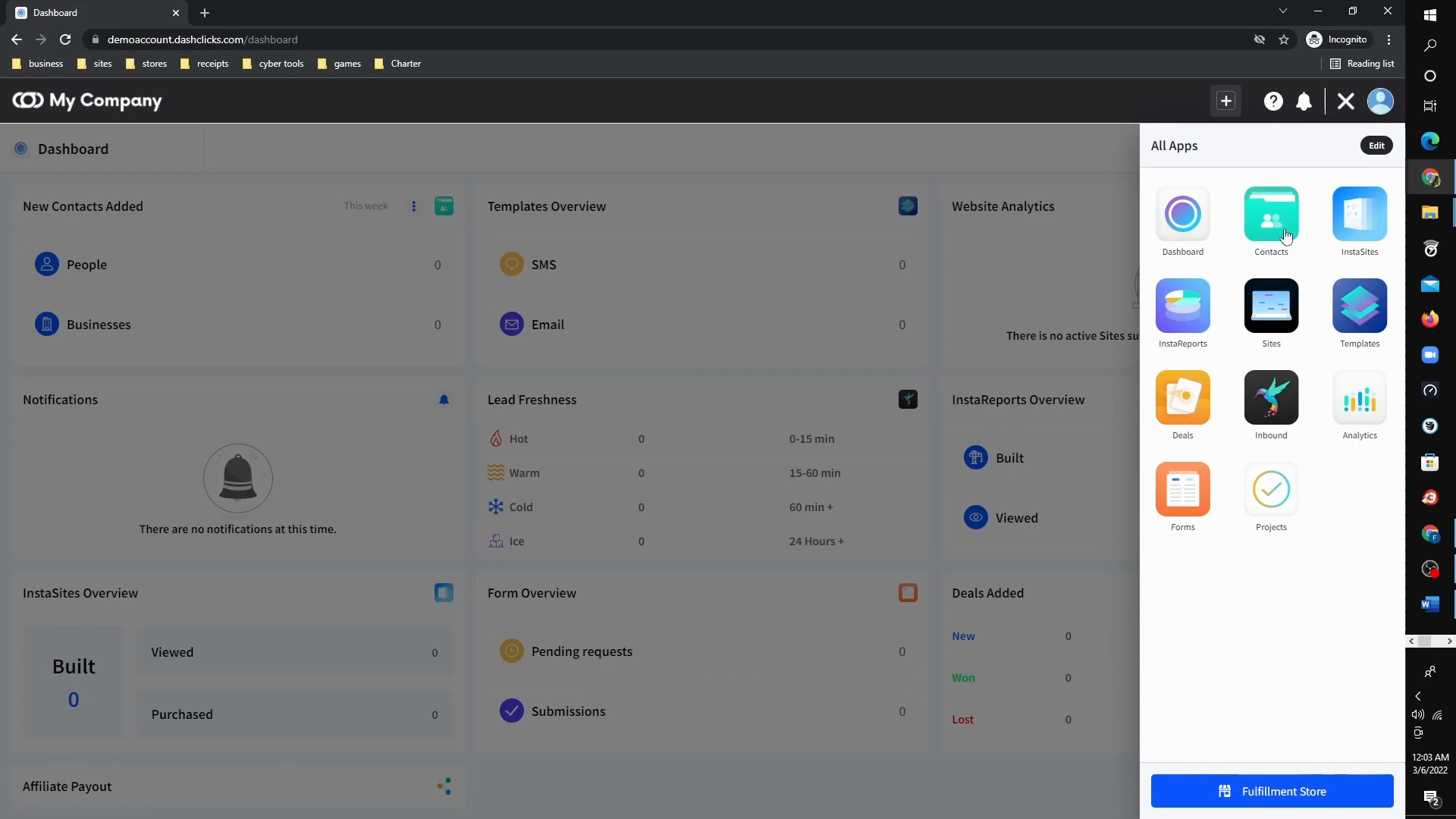
The dashboard layout is conventional (left nav, multi-widget home, app drawer) and most agency owners are quoting and ordering fulfillment within the first session. The InstaReport, Forms, and Deals modules are where new users spend their first hour, and the in-product flows are short. Branding the portal and pointing a custom domain takes under an hour. The learning curve is real only if you try to push the CRM into pipeline-automation territory it was never built for.
Pricing — 4.6 / 5
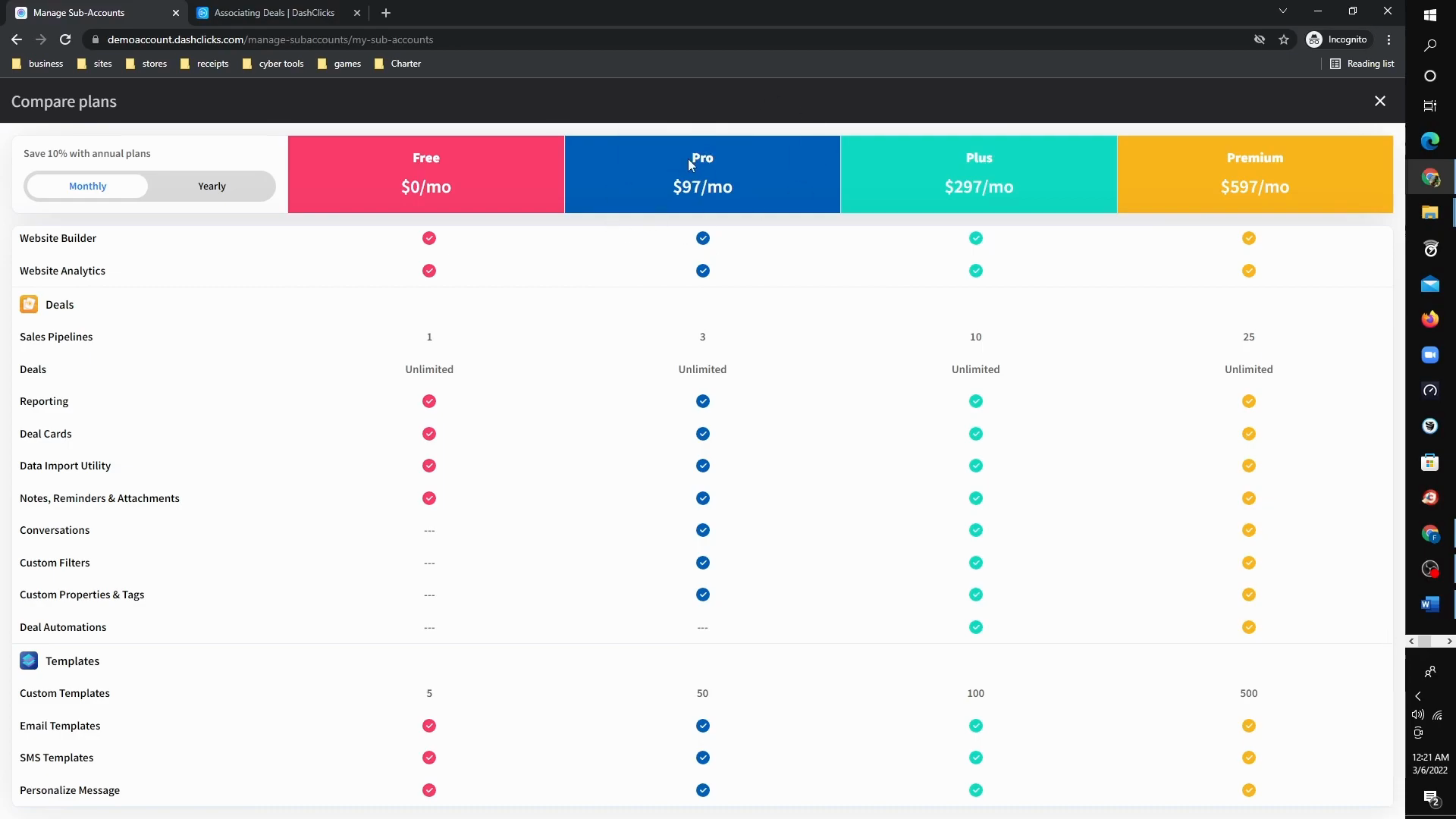
Platform access is $0/mo with no seat caps and no trial clock. You only pay when you place a fulfillment order: roughly $199/mo SEO Starter, $299/mo Google Ads management (excludes ad spend), $149/mo social, and around $499 one-time for a website build. That structure removes the cash-flow problem most bootstrapped agencies hit with stacked SaaS subscriptions. The risk is churn-driven: if a client cancels mid-month you absorb that month of wholesale cost, so a 30-day cancellation clause matters.
Support — 3.7 / 5
Platform support (chat, email, docs) is responsive for billing, branding, and onboarding questions. The variable is fulfillment quality control: when a campaign deliverable slips, you own that conversation with your client even though DashClicks did the work. PPC management gets stronger user feedback than content-heavy services. Build review checkpoints into your client SLA so a missed week does not surprise you.
White-label — 4.5 / 5
Custom domain, logo, favicon, login image, color scheme, and email sender are all editable from one Settings page. Clients log in to a portal that carries your brand end to end. There is no paywall on the white-label layer the way there is on GoHighLevel at the $297/mo Unlimited tier. For an agency that wants a branded client experience without a software subscription, this is the cheapest credible option in the category.
Automation depth — 3.2 / 5
Forms route into the Deals pipeline and InstaReports auto-pull from Google Analytics, GSC, and ad platforms on a schedule, so basic agency reporting does not need a manual touch each month. Beyond that the automation layer is thin: no visual workflow builder, no native two-way SMS, no behavior-triggered email sequences. Operators who need that depth pair DashClicks for fulfillment with a separate tool for CRM and automation.
Pricing in practice
The pricing model is unconventional, and that is the point. The platform itself is free forever. No seat fees, no monthly SaaS subscription. You pay per fulfillment order. That means your platform cost is $0 until you are generating revenue, which removes the cash-flow problem most bootstrapped agencies face with software stacks.
Fulfillment services are priced individually. As of early 2026 the wholesale rates run roughly $199/mo for SEO Starter, $299/mo for Google Ads management (excludes ad spend, passed through to the client), $149/mo for social media management, and around $499 one-time for a website build. These are the prices you pay DashClicks. What you charge your clients is entirely up to you.
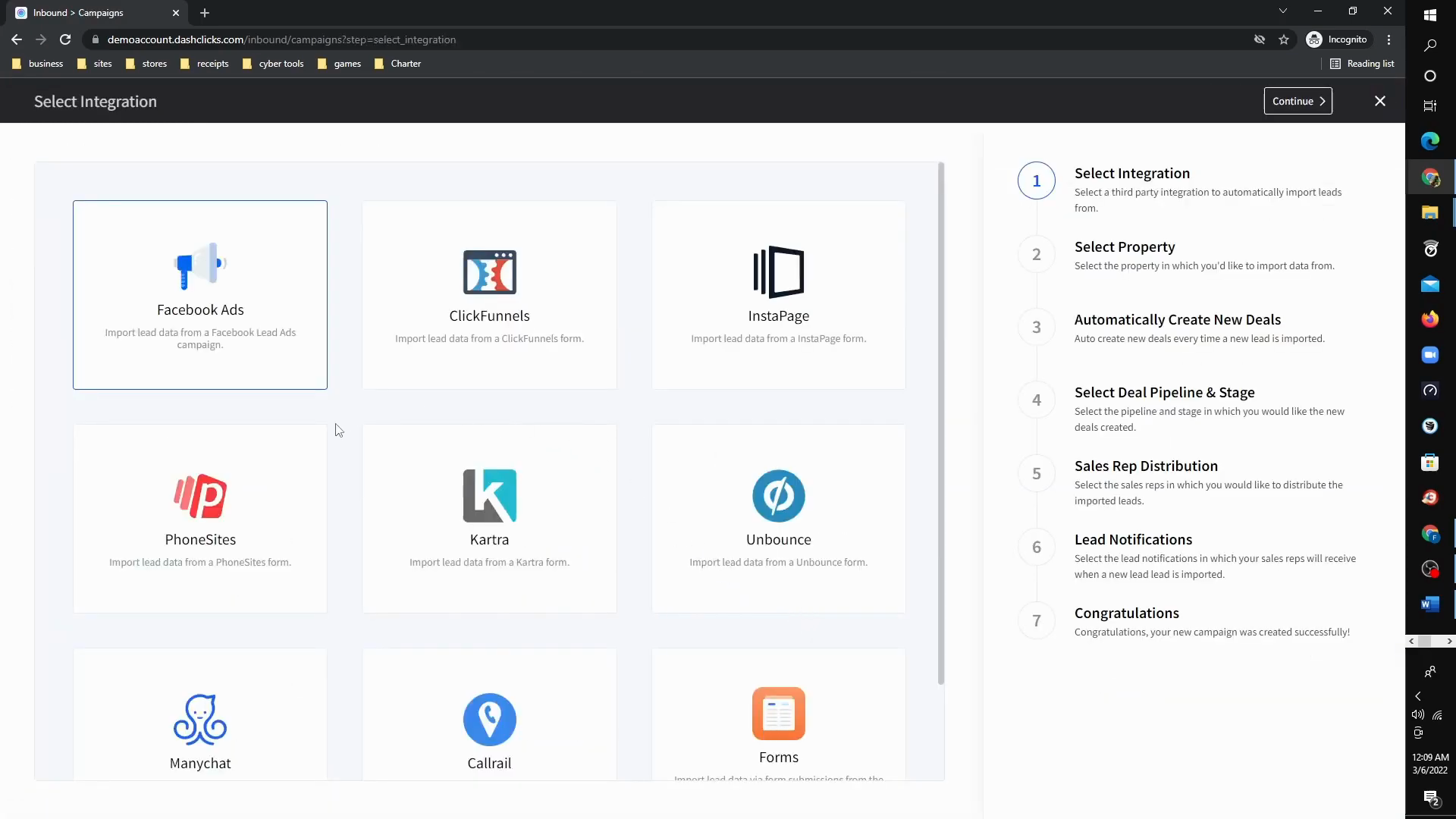
Kartra, Unbounce, and Manychat as fulfillment integration options" style="width:100%;height:auto;border:1px solid #e5e7eb;border-radius:8px;" loading="lazy">
Inbound campaigns pull leads directly from Facebook Ads, ClickFunnels, InstaPage, Kartra, Unbounce, and Manychat integrations.
Hidden cost: client churnFulfillment is invoiced monthly. If a client cancels mid-cycle you absorb that month of wholesale cost. Build a 30-day cancellation clause into every client contract or you will eat the margin on a single bad churn month.
Confirm current wholesale rates inside the dashboard before quoting clients. The published catalog shifts as new packages are added.
The margin math: what white-label fulfillment actually costs
Take a standard local SEO retainer. You sell it to a small business for $800/month. You order the DashClicks SEO Starter package at approximately $199/month wholesale. Your gross margin is $601/month, or 75%. That holds up across most of the fulfillment catalog.
At a five-client mix (two SEO at $800/mo, two Google Ads at $600/mo, one social at $500/mo), the math works out to $3,300/mo in client revenue against $1,145/mo in DashClicks wholesale. That is roughly $2,155/mo in gross profit with zero fulfillment overhead of your own. Scale to 15 clients on similar packages and you are at $6,000 to $7,000/mo gross profit with one person managing client relationships.
A mid-level SEO manager costs $50,000 to $70,000/year fully loaded. DashClicks gives you the equivalent output at a fraction of that cost when your client count is under 20. Beyond 20 retainers, the quality-control overhead of managing an external team starts to show up and the in-house economics begin to swing back.
Tip from the testFront-load the SLA with your fulfillment expectations in writing inside DashClicks before the first month ships. Approval cycles, revision rounds, and reporting cadence in writing in week one prevents most of the support-escalation surface area later.
CRM, pipeline, and intake
The Deals module is the agency CRM: a Kanban-style pipeline view where you build stages (lead, proposal sent, closed, lost), drop in deals, and track revenue per client. During testing we built a five-stage pipeline and pushed three test deals through end to end without hitting friction. The pipeline is functional. It is not a sales-automation system.
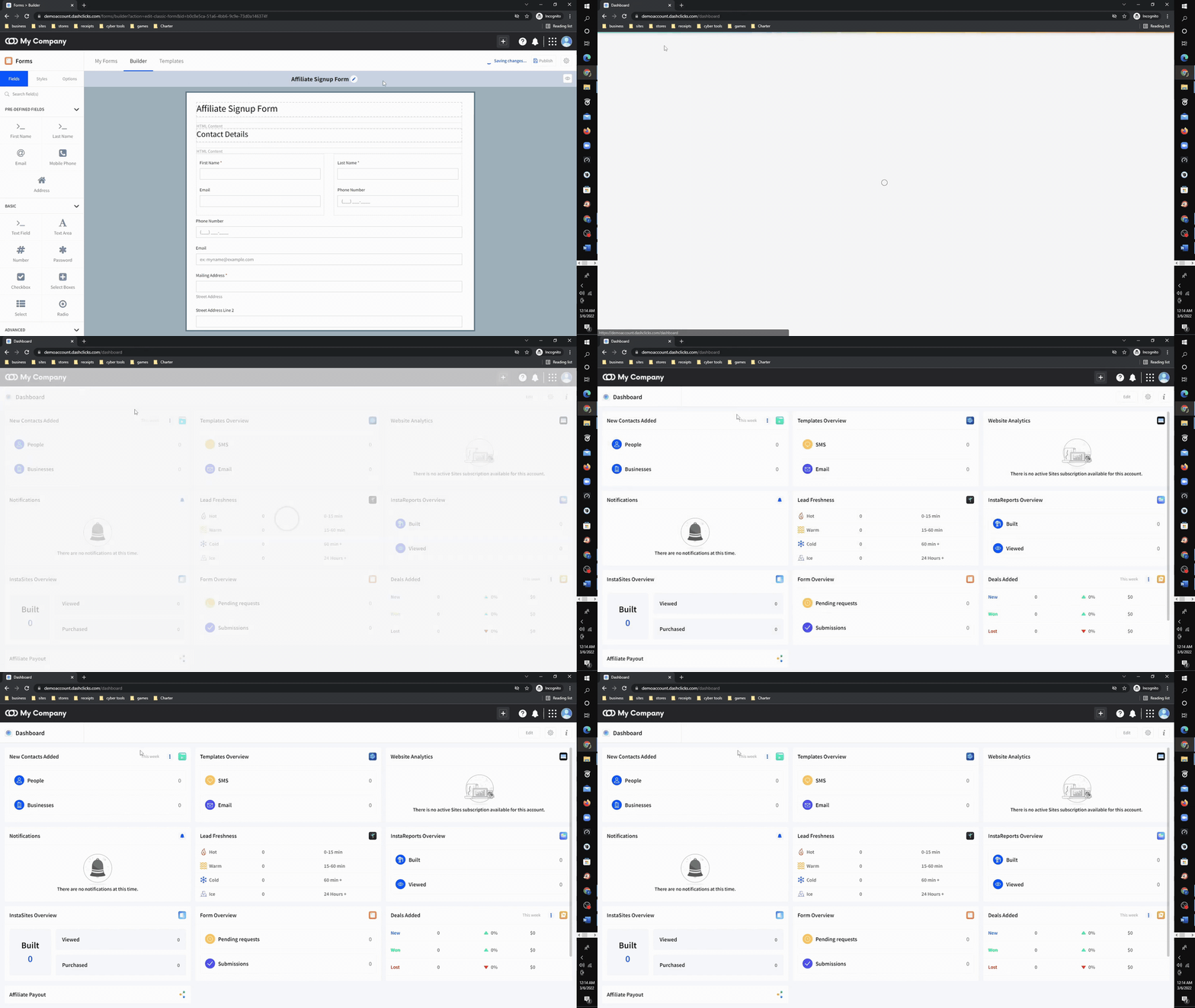
Forms feeds the pipeline. The Forms builder assembles client intake forms (drag fields in, set validation, brand the form to your domain) and routes submissions straight into Deals or Contacts. For agencies that currently bounce intake between Google Forms, email, and a Notion doc, this is the consolidation layer.
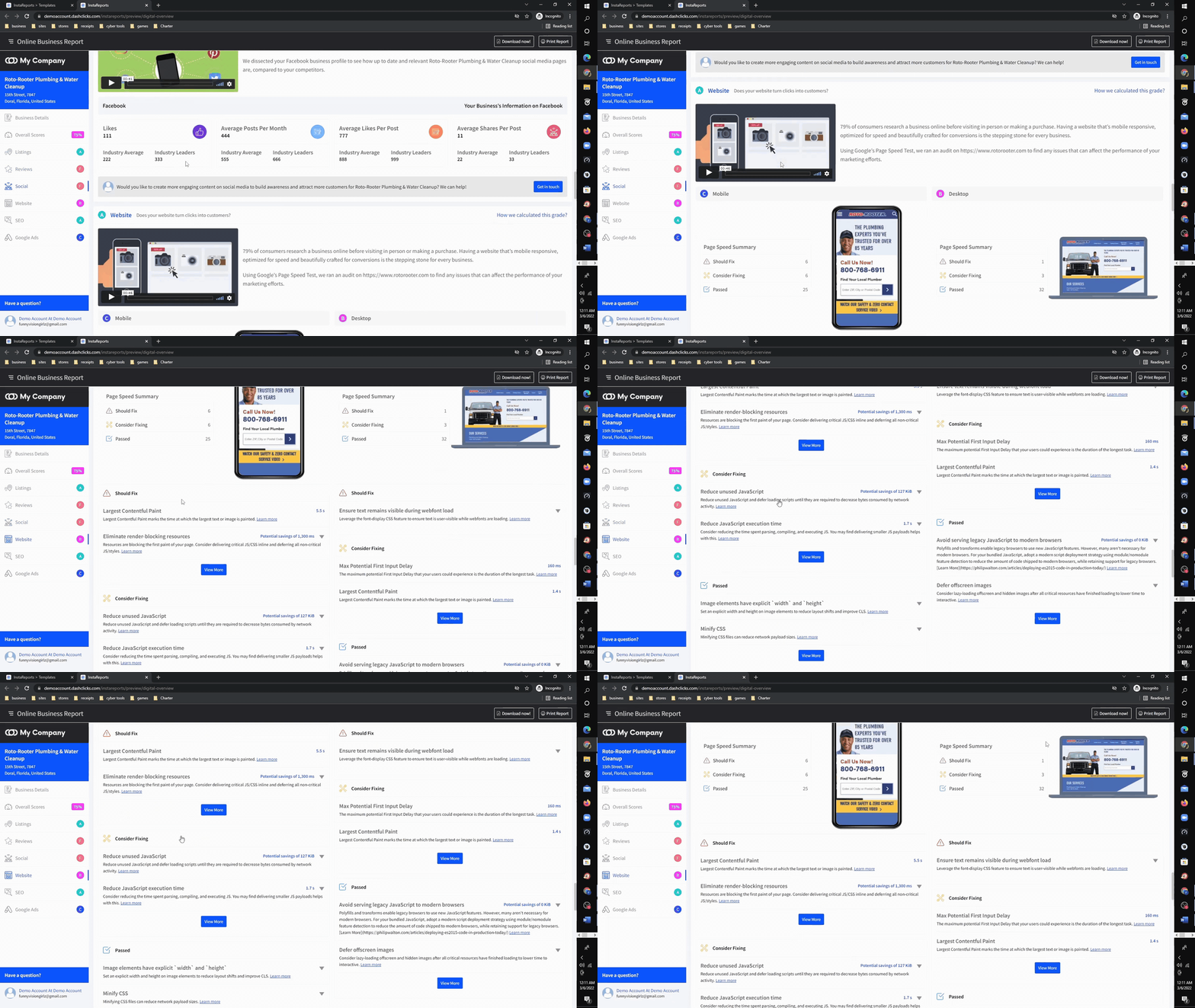
The Forms builder assembles client intake forms and routes submissions straight into the main dashboard pipeline.The InstaReport scrolls through Facebook engagement, website speed, and SEO audit sections in a single branded document.
The free platform was the unlock. We onboarded three SEO clients in week one and the math worked from day one because we were not paying $300/mo for software while we were still selling.
White-label and the client portal
The white-label setup is the differentiator. From the Settings page you set a custom domain, upload your logo and favicon, swap the login background image, configure email sender, and pick a color scheme. The end-user portal carries your brand from login to logout. Clients log in to your URL, see your name in the header, and read reports under your brand. DashClicks is invisible.
This is what nothing at this price can match. GoHighLevel charges $297/mo for the equivalent rebrand. DashClicks charges $0 and the portal goes live the same hour you upload the logo. For agencies in the lean stage, this single feature pays for the platform shift.
What actually worksPoint a real subdomain (e.g. portal.youragency.com) instead of using the default. Two CNAME records and a 5-minute DNS wait. Clients who log in to a real branded URL never ask what platform you are running, which is the entire point of white-label.
Reporting and InstaReport
Reporting is where DashClicks recovers the most time on a recurring basis. InstaReport pulls live data from Google Analytics, Google Search Console, Facebook, and the major ad platforms into a single white-labeled report you can scheduled-send to clients monthly. During testing we set up a three-client report cycle and the time saved versus building reports manually in Looker Studio or PowerPoint was four to eight hours a month per agency.
The reports are interactive (clients can click through to underlying listings, audits, and metrics) which closes the loop on "are they actually reading these." Viewer tracking shows when a client opened the report and how long they stayed.
The InstaReports section also surfaces the fulfillment plan comparison so you can confirm wholesale rates before quoting a client.
Fulfillment quality and the trade-off
The honest part of the review. You do not control the fulfillment team. If a campaign misses a deadline or ships sub-standard work, your client calls you, not DashClicks. Across the catalog, PPC management reads as the strongest line. Content-heavy services (long-form SEO content, social copy) are more variable. The platform brokers the work. You QA the output before it hits the client.
The protective move is structural: build a 24-hour internal review window into every deliverable workflow. Fulfillment ships to your portal first, you sign off, then it goes to the client. That single step removes the most common support escalation pattern.
Protect the client relationshipTreat fulfillment as a vendor, not a partner. Internal QA on every deliverable before it ships to the client. Two-strike rule: a service line that misses twice in a quarter gets rotated to a different fulfillment provider. The portal is yours, the brand is yours, the relationship is yours.
DashClicks pricing
Most popular
Platform
$0/mo
Free forever
✓White-label client portal
✓Built-in CRM and Deals pipeline
✓InstaReports automated reporting
✓Branded onboarding forms
✓Sub-account management
Every agency. The platform is free and the fulfillment catalog is pay-per-order.
Client churn risk:Fulfillment is invoiced monthly. If a client cancels mid-cycle you absorb that month's wholesale cost. A 30-day cancellation clause in your client contract closes the gap.
Ad spend pass-through:Google Ads, Facebook Ads, and Microsoft Ads spend is billed direct to the client's card. Confirm the billing setup at onboarding so the first invoice does not surprise them.
Pros & cons at a glance
What works
+Free platform access removes the upfront SaaS bet entirely. You pay only when you have a paying client
+White-label client portal is clean and brandable in under an hour
+Fulfillment catalog covers the four services most small business clients buy: SEO, PPC, social, web
+Predictable wholesale pricing means you can build a repeatable margin model without guessing
+Most agencies are operational within the first day, not the first week
+Automated InstaReports save 4 to 8 hours per month of manual client reporting
+No minimum order volume. Start with one client and one service
What doesn't
−You do not control the fulfillment team. Missed deadlines and subpar work are still your client conversation
−CRM is functional but basic. No visual workflow builder, no two-way SMS, no behavior triggers
−No native funnel or website builder. You can order a site as a service, you cannot build one yourself
−Fulfillment quality varies by service line. PPC management reads stronger than content-heavy work
−Not built for SaaS resale. Different model than GoHighLevel
−Wholesale rates are not fully public. You need a free account to see current pricing before quoting
How DashClicks compares
Feature
DashClicks
GoHighLevel
HubSpot
ClickFunnels
Platform cost
Free (pay per order)
$97 to $497/mo
$45+/mo
$97 to $497/mo
White-label portal
Yes (free)
Yes ($297+)
No
Limited
Done-for-you fulfillment
Yes (in-house team)
No
No
No
Marketing automation
Limited
Extensive
Extensive
Funnel-focused
Funnel / site builder
No (order as service)
Yes
Limited
Yes
Learning curve
Low
High
High
Moderate
Best fit
Agencies reselling services
Agencies reselling SaaS
Sales-led companies
Funnel-led course sellers
GoHighLevel wins for agencies that want to resell software access and run deep automation in-house. HubSpot is built for sales-led companies with enterprise CRM needs. ClickFunnels owns funnel-led course and digital product businesses. DashClicks is the only platform here that ships an actual fulfillment team behind the dashboard, so the comparison only really runs for agencies who want to stop fulfilling work themselves.
Frequently asked questions
Is DashClicks really free?
Yes. Platform access is $0/mo with no seat fees and no trial clock. You only pay when you place a fulfillment order (SEO, PPC, social, or web). The CRM, white-label portal, Deals pipeline, InstaReports, and Forms are all included on the free tier.
How does the fulfillment pricing work?
Each service has a fixed wholesale rate you pay DashClicks. As of early 2026, SEO Starter is around $199/mo, Google Ads management is around $299/mo (excludes ad spend), social is around $149/mo, and a website build runs around $499 one-time. What you charge your clients is entirely up to you. Most agencies hold a 70% to 80% gross margin.
How does DashClicks compare to GoHighLevel?
Different problems. DashClicks is white-label fulfillment with a free platform, built for agencies that want to stop coordinating contractors. GoHighLevel is a CRM and marketing automation suite at $97 to $497/mo, built for agencies that want to fulfill in-house and resell software. Many operators eventually run both: DashClicks for delivery, GoHighLevel for CRM and automation.
Can I white-label the platform?
Yes, on the free tier. From the Settings page you set a custom domain, logo, favicon, login image, color scheme, and email sender. Clients log in to a portal that carries your brand end to end. Setup takes under an hour.
What happens if a client cancels mid-month?
Fulfillment is invoiced monthly so you absorb that month of wholesale cost on the cancelled service. Build a 30-day cancellation clause into every client contract to close the gap. The platform itself is free, so there is no SaaS exposure on cancellation, only the active fulfillment line.
Is the CRM deep enough to replace HubSpot or Pipedrive?
No. The Deals module is functional for stage-based pipeline tracking but it is not a sales-automation system. There is no visual workflow builder, no two-way SMS, and no behavior-triggered email sequences. If you need that depth, pair DashClicks for fulfillment with a dedicated CRM.
The bottom line
DashClicks is the fastest path from closing digital marketing retainers to running a real white-label agency with a portal and a production team behind it. The free platform model removes the cash-flow risk and the wholesale margin math works for most operators under 20 clients. The ceiling is real: the CRM is thin, automation is minimal, and quality control sits with an external team. For agencies in the $5,000 to $30,000/mo revenue range that want to scale without scaling headcount, nothing else in the category removes more friction.



 Kartra, Unbounce, and Manychat as fulfillment integration options" style="width:100%;height:auto;border:1px solid #e5e7eb;border-radius:8px;" loading="lazy">